Citizenship
Democracy, cooperation and responsibility are part of everyday relationships.
Pedagogical Approach
Escola Vida sees the child as a young citizen shaped through relationships with themselves, with others and with the world.
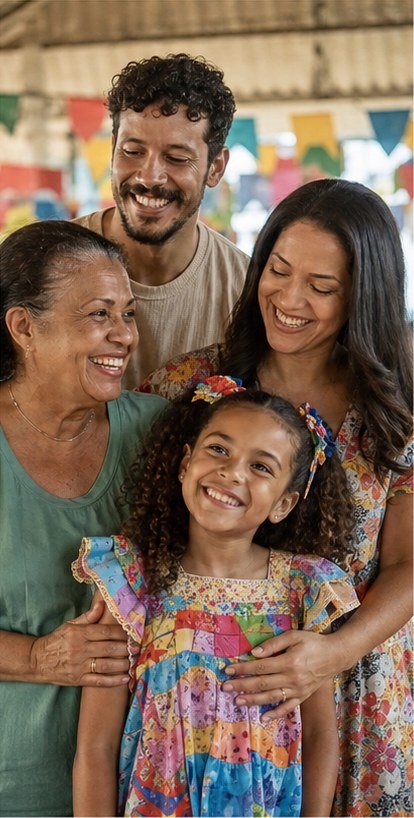
Education through relationships
School work provides access to knowledge and opportunities to construct and recreate it. Learning grows from the child's encounters with other people, the environment and situations that inspire action and reflection.
The teacher acts as a mediator: interpreting needs and interests, offering challenges and organizing experiences that support conscious, critical, caring, creative and autonomous people.
Mistakes are understood as logical learning hypotheses, not as the end of an experience.
Principles in practice
Every child brings a history, a pace and unique ways of understanding the world.
Democracy, cooperation and responsibility are part of everyday relationships.
Children are encouraged to think, choose, explain and act consciously.
Observing progress helps educators plan the next steps in learning.
Challenges connected to life promote investigation, reflection and dynamic intelligence.
Individual moments and characteristics are recognized as part of development.
Family habits, customs and values inform the way school understands each child.
School and family
A close relationship with families deepens understanding and connects experiences at school and at home.
Answers about how Escola Vida understands learning, assessment and partnership.
It means creating experiences where play, investigation, creation and problem-solving all help children build knowledge.
The teacher acts as a mediator, observing needs and interests and proposing strategies that encourage progress.
Mistakes are treated as learning hypotheses. They help educators understand reasoning and plan new interventions.
Assessment is ongoing and follows progress and possibilities. Its purpose is to guide learning, not compare children.
Through close communication, events, celebrations and information sharing that helps the school understand each child.
A conversation with our team connects these principles to your child's current moment.